
Your colon is running a chemical factory, and its output goes straight to your immune system.
The trillions of microbes living there produce a constant stream of signals — some calming, some inflammatory — and the balance between them is now tied to heart disease, type 2 diabetes, arthritis, even neurodegeneration. The common thread is chronic, low-grade inflammation, sometimes called "inflammaging." Quiet. Persistent. Nothing like the sharp inflammation of an infection.
Nutritional immunology studies exactly that conversation: how what you eat reshapes your microbial community, and how that community, in turn, tunes inflammation up or down.
The border where outside meets inside
The gastrointestinal tract houses the largest collection of immune tissue in the body.
It's a border. The outside world — food, microbes, potential pathogens — meets the inside of you there, across a surface area roughly the size of a tennis court. The immune system stationed along it has an awkward job: tolerate trillions of beneficial microbes and harmless food proteins, while staying ready to attack genuine threats.
The gut microbiota — the community of bacteria, archaea, fungi and viruses living mainly in the colon — is a central player in that balancing act. These microbes produce vitamins, transform bile acids, train immune cells, and generate that constant stream of chemical signals, which reaches far beyond the gut, including to the brain.
When the community is diverse and well-fed, the signals tend toward immune tolerance. When it's disrupted — a state called dysbiosis — the signals can tilt toward chronic inflammation.
So what sets the tone of those instructions? Dinner, to a surprising degree.
Every meal delivers raw material to the colon: fiber the human enzymes can't touch, compounds from plants, fats, and the by-products of whatever the small intestine didn't absorb. The microbes process that delivery and return their own products — vitamins, transformed bile acids, short-chain fatty acids — to the host. The immune tissue lining the gut samples those products constantly, and the sampling never pauses, because the deliveries never pause either.
Seen that way, diet isn't an occasional influence on this system. It's the supply chain. Change what arrives, day after day, and you change what the microbes can make — and therefore what the immune system spends its time reading.
Dietary fiber is the key that starts the anti-inflammatory cascade, and its path starts with a failure — yours. Humans lack the enzymes to digest most fiber, so it arrives in the colon largely intact. What your own body can't break down becomes someone else's food.
There, specialised fiber-fermenting bacteria break it down through anaerobic fermentation, producing three main short-chain fatty acids: acetate, propionate and butyrate.
As detailed in a 2026 review of diet–microbiome interactions, SCFAs bind to free fatty acid receptors (FFAR2 and FFAR3) on enteroendocrine cells lining the gut. That binding stimulates the cells to release GLP-1 (glucagon-like peptide-1) and peptide YY — hormones that suppress appetite, improve glycemic control, and communicate via the vagus nerve with the hypothalamus and brainstem.
Butyrate fed the mice, and their brains changed
Of the three SCFAs, butyrate has attracted the most research attention, and it's easy to see why.
Colon cells use it directly as their preferred energy source. The cells lining the gut literally run on a product made by the microbes living on top of them. Butyrate also acts as a histone deacetylase inhibitor — it can influence which genes get switched on or off in immune and intestinal cells, generally in an anti-inflammatory direction.
A study summarised by researcher Rodney W. Johnson tested whether adding soluble fiber could change the inflammatory profile of aging. Adult and aged mice were fed either a low-fiber diet (1% cellulose) or a high-fiber diet (5% inulin) for four weeks.
The inulin-fed mice developed an altered gut microbiome with increased production of butyrate, acetate and total SCFAs. Under the microscope, aged mice on the low-fiber diet showed increased inflammatory infiltrate in the colon — significantly reduced in the high-fiber group. Less inflammatory crowding in the gut wall, in the older animals, from a change in fiber alone.
More striking was what showed up further away: gene expression in the brain's immune cells (microglia) shifted toward a less inflammatory profile in the aged high-fiber mice. The intervention was in the food bowl. The signature appeared in the brain.
The authors concluded that high-fiber supplementation in aging is a non-invasive strategy to raise butyrate levels and potentially counterbalance age-related microbial disruption. A gut finding with a brain signature — the kind of result that explains why researchers keep following this thread, including work on daily habits that may delay neurodegeneration.
A landmark study in the European Journal of Immunology (2018, available on PubMed Central) answered by removing the sensor: animals deficient in GPR43 — a key SCFA receptor — could not mount appropriate acute immune responses for barrier defense, and instead developed uncontrolled chronic inflammatory responses following intestinal injury, along with increased intestinal cancer.
Dietary fiber and direct SCFA administration suppressed intestinal inflammation and cancer development, through GPR43-dependent and independent pathways. The core insight: the benefit was mediated not by changing which microbes were present, but by acting on the host's own tissue and immune cells. Unable to sense SCFAs, the host let commensal bacteria invade colonic tissue unchecked, driving chronic Th17-type inflammation.
Endotoxin, leaking the wrong way
If SCFAs are the gut's anti-inflammatory messengers, lipopolysaccharide (LPS) — endotoxin — is a leading pro-inflammatory one.
LPS is a component of the outer membrane of Gram-negative bacteria. In a healthy gut it stays in the intestinal lumen, where it belongs. Contained, it's unremarkable.
When the barrier is compromised — through dysbiosis, low fiber intake, or high-fat Western dietary patterns — LPS can translocate into the bloodstream. There, it activates Toll-like receptor inflammatory pathways throughout the body.
The 2026 News-Medical review drew the contrast sharply. Westernised dietary patterns are associated with fewer beneficial fermenters, altered bile acid signaling, greater endotoxin load, and amino-acid fermentation products implicated in insulin resistance.
Non-glycemic carbohydrates — oligosaccharides, fibers and resistant starch — do the opposite. They strengthen the gut barrier and suppress inflammatory pathways through beneficial microbial shifts and SCFA production.
The same review noted that pro-inflammatory stimuli can also influence the hypothalamic-pituitary-adrenal (HPA) axis, linking gut-derived inflammation to the body's central stress-response system — the same system targeted by mindfulness and vagus nerve research.
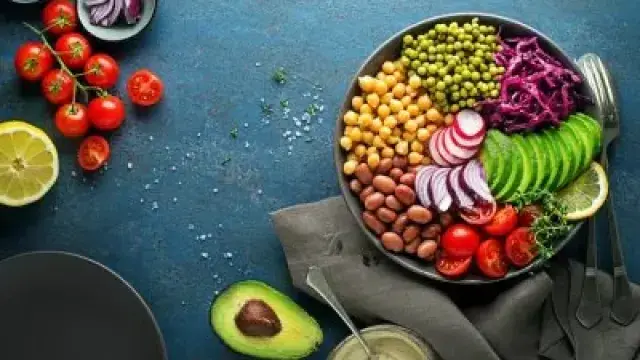
Against that background, one dietary pattern carries the strongest microbiome evidence: the Mediterranean diet. It's rich in fiber (vegetables, legumes, whole grains), polyphenols (berries, olive oil), nuts, and omega-3 fatty acids from fish.
A narrative review published in Nutrients in September 2026 synthesised the evidence linking Mediterranean diet adherence to neuroprotection in cognitive aging, Alzheimer's and Parkinson's disease. Its findings: Mediterranean components — fiber, polyphenols, whole grains, legumes, nuts, extra-virgin olive oil and omega-3s — may promote beneficial microbial communities and their metabolite production.
The resulting SCFAs, secondary bile acids, indole derivatives and phenolic metabolites may strengthen both the intestinal and blood–brain barriers, regulate immune responses and suppress neuroinflammation.
Run the chain in reverse and the picture darkens: dysbiosis may increase intestinal permeability, LPS translocation, systemic inflammation, and microglial activation in the brain. Run it forward, and the sequence is mechanical enough to test: fiber feeds butyrate-producing bacteria, their metabolites send systemic anti-inflammatory signals, and the brain's resident immune cells settle into a less inflammatory state.
This does not mean diet treats Alzheimer's disease. It means chronic inflammation, modulated in part by the gut, is increasingly viewed as a shared upstream contributor to brain aging. A contributor isn't a cure, and pretending otherwise would outrun everything the review actually found.
Promising mice, messier humans
The Nutrients reviewers stated the caveats plainly: the evidence remains heterogeneous and largely observational or experimental.
Human trials of fiber and microbiome interventions are often small, short and inconsistent. One exploratory synthesis found that a three-month multi-nutrient intervention did not alter gut microbiota composition or systemic inflammation in humans, despite promising mouse data. Three months, in people, and the effect seen in mice didn't show. That gap — between tidy animal experiments and untidy human ones — is where this field currently lives.
Larger prospective cohorts and adequately powered, longer-term trials are needed before clinical translation. Until then, the strongest statements the evidence supports are about patterns and mechanisms, not prescriptions.
Other questions stay open, and they're basic ones. Which fibers, at what doses, for which people? Microbial communities vary enormously between individuals, so the same diet can produce different SCFA profiles in different guts.
Claims that specific probiotic products "fix" inflammation, or that microbiome tests can prescribe your ideal diet, currently outrun the evidence. Nor can probiotics substitute for fiber on current data. The strongest evidence links fiber-driven SCFA production — an ecosystem effect of feeding the microbes you already have — to anti-inflammatory outcomes, rather than to any single probiotic strain.
Eat more fiber from diverse sources — vegetables, legumes, whole grains, nuts, seeds, fruit — because different fibers feed different bacteria. Favour the Mediterranean pattern's core: olive oil over butter, fish and poultry over processed red meat, whole foods over ultra-processed ones. Limit the patterns most consistently linked to dysbiosis and endotoxin load — high added sugars, refined starches, processed fats, low fiber.
Notice, too, what that short list doesn't contain: no single ingredient, no exotic addition, no purge, no product with a strain name on the label. The Mediterranean pattern is built from ordinary categories — vegetables, legumes, whole grains, nuts, olive oil, fish — combined consistently enough that the microbes downstream receive a steady supply of the fibers and polyphenols they ferment. Consistency is doing the work that novelty gets credit for.
Microbial composition can shift within days of a dietary change, but the downstream effects on inflammation likely require sustained patterns over weeks to months — and the field still lacks precise timelines from long-term human trials. No single "superfood" reengineers a microbiome. The communities in your colon respond to patterns, not meals — the same consistency principle that governs strength training after 40 and restorative sleep.
Disclaimer: This article is for informational purposes only and is not medical advice. Discuss dietary changes, especially for managing chronic inflammatory conditions, with your healthcare provider or a registered dietitian.
Sources
- Diet-microbiome interactions, SCFAs, GLP-1/PYY signaling, and metabolic inflammation — 2026 review (News-Medical): news-medical.net
- High-fiber (inulin) diet, butyrate, and microglial inflammation in aging mice (Johnson et al.): researchgate.net
- SCFA-GPR43 axis in chronic intestinal inflammation and cancer (European Journal of Immunology, 2018; PMC): pmc.ncbi.nlm.nih.gov
- Gut microbiome-mediated neuroprotective effects of the Mediterranean diet — narrative review (Nutrients, September 2026): mdpi.com
- Dietary fiber, gut barrier, SCFAs, and NF-κB inflammatory signaling — systematic review: researchgate.net
- SCFAs in chronic inflammatory disease — exploratory synthesis (BMC Pulmonary Medicine, Springer): link.springer.com