
She is six years old, from Latifabad in Hyderabad, and she reached the Indus Hospital in Karachi on 20 September with rabies. A week later, on 27 September, a four-year-old boy from Dadu was brought in with the same diagnosis.
Two children, one hospital. Behind them sits a figure that takes a moment to absorb: between January and September this year, the Indus Hospital & Health Network recorded 28 rabies cases and more than 14,000 dog-bite cases. At least nine people died of rabies at the hospital last year.
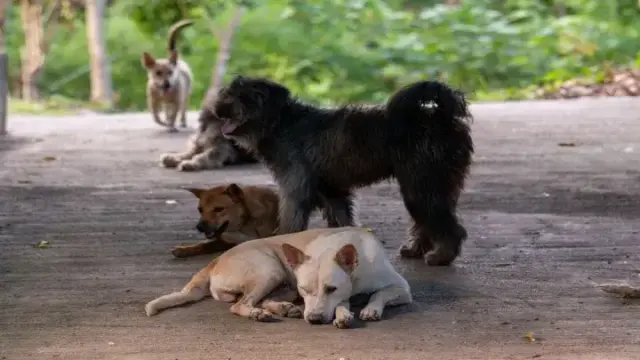
The numbers were shared at the network's World Rabies Day programme, and they describe one facility's register, not a province-wide count. Recent reporting has put Sindh-wide death tolls at odds with each other, sometimes sharply, so the honest place to stand is on a single hospital's books. Those books are quite enough. Fourteen thousand dog bites in nine months works out at more than fifty people a day arriving at one hospital with the same fear. Rabies in Sindh is not a freak event. It is a routine emergency, arriving child by child, from streets where children walk to school and play within reach of stray dogs nobody has vaccinated.
A disease that gives you time, then none
Rabies holds a strange place in medicine. It is almost always preventable after a bite, and almost always fatal once symptoms appear. The World Health Organization states it without decoration: once symptoms show, the disease is almost invariably fatal.
The space between those two facts is a window. After a bite, the virus travels slowly toward the brain, over days and weeks. Treatment inside that window — thorough wound washing, a course of vaccine, and rabies immunoglobulin for severe bites — can stop it. Miss the window, or treat the bite as an ordinary wound, and medicine has almost nothing left to offer.
At the Karachi programme, the estimate shared for Pakistan as a whole was 2,000 to 5,000 rabies deaths a year, with around 96 per cent linked to dog bites. Indus has worked this ground for a long time. Its Rabies Prevention and Training Centre, set up in 2008, has treated more than 150,000 dog-bite cases, provides post-exposure treatment free of charge to WHO standards, and has trained over 700 medical professionals.
Post-exposure treatment is, at bottom, an immune-system race: the vaccine must teach the body to recognise the virus before the virus reaches the brain. It is the same immune system whose everyday condition we examined in our reporting on nutritional immunology and the gut microbiome — except that here the race is not about long-term health. It is measured in days.
The 96 per cent figure settles something else, too: where the problem actually lives. Not in hospitals. In the dog population on the province's streets. Hospitals meet this disease at its very end, one bitten child at a time, which is why even perfect treatment is only ever half an answer. And the centre's long history carries an uncomfortable implication. The knowledge of how to do this properly — the washing, the vaccine, the immunoglobulin, the timing — has existed inside the province's own flagship network, in depth, since 2008. What failed this September was not knowledge. It was the last mile.
The wound was stitched. That was the failure
If the Latifabad girl is the latest case, Rayan Hussain is the one Hyderabad keeps returning to. Six years old, from the same city. Weeks before the September admissions, he was first taken to Shah Bhitai Hospital in Latifabad, where — by the accounts that followed — the bite wound was stitched up as an ordinary wound, instead of being washed and assessed under the anti-rabies protocol.
Rayan was one of five people who died of rabies within three weeks in September, deaths that happened despite treatment having been given. The Sindh Health Department suspended seven health workers and sought explanations from seven senior officials. What the department found was not exotic. Some patients had been given the vaccine but not rabies immunoglobulin. Some wounds had been missed altogether, or managed the wrong way. The vaccine-versus-immunoglobulin gap is not technical trivia: the vaccine trains the body to defend itself, and training takes time, while immunoglobulin is ready-made antibody — protection on loan for the dangerous early days. Severe bites are never supposed to be left waiting on the vaccine alone.
Read that list again. A skipped injection. A wound closed too soon. These are small, ordinary failures, of the kind that happen in busy facilities everywhere. Rabies does not forgive them.
It is worth pausing on the geography. Latifabad appears twice in this story within a single season — once as the neighbourhood a dying boy was carried into hospital from, once as the home of the six-year-old girl admitted in September. One part of one city, carrying both the system's failure and its latest emergency. Whatever else the province's new network achieves, it will be judged in places like Latifabad first.
The aftermath does not stay inside the hospital either. It follows families home: the waiting, the watching for symptoms, the fear that settles over a street where a child has died. It is a slower harm than the bite itself, closer to the chronic anxiety our coverage of mindfulness-based stress reduction has tried to take seriously. This year, Latifabad has had plenty of it.
278 units, and a dashboard that counts doses
The system's answer, set out by Sindh Chief Secretary Syed Asif Hyder Shah at the Indus ceremony, is scale. The provincial government and Indus have established or upgraded 278 rabies prevention and treatment units across Sindh. Of those, 112 are designated referral centres. Telemedicine connects the smaller units to specialists, so a nurse in a small facility is not making the hard calls alone. And a digital Anti-Rabies Dashboard tracks cases, dose schedules and vaccine stocks.
The stock count matters more than it sounds. A unit without immunoglobulin on the shelf is only half a unit — September proved that. The throughput is already large: in the first eight months of the year, roughly 45,000 bite victims were treated, with around 138,000 doses of anti-rabies vaccine and about 5,000 doses of immunoglobulin administered, according to the figures reported around the Health Department's September action.
Notice, too, where the two September children ended up: Karachi. A girl from Hyderabad, a boy from Dadu, both carried to the same metropolitan hospital for the same emergency. That journey is what the 278 units exist to shorten. A family in Latifabad or Dadu should be able to start the washing, the vaccine and the assessment close to home, on the day of the bite, with a referral centre and a specialist on a screen behind them — not spend the critical first day on the road.
None of this is glamorous. Units, dashboards, referral lists. But the September failures were failures of precisely this layer — the ordinary machinery of protocol — and this is the layer the province says it has now rebuilt.
The first fifteen minutes
What decides a case is often decided before any doctor is involved. WHO guidance starts at the scene of the bite: wash and flush the wound immediately, with soap and running water, for a minimum of fifteen minutes. Not a quick rinse. Fifteen minutes, timed. The washing is not ritual, either — soap and running water physically flush the wound, and that quarter of an hour at a tap can decide whether the virus gets a foothold at all.
Do not apply home remedies to the wound. And do not let it be stitched shut before a rabies assessment — that instruction is, in effect, written into Rayan Hussain's file. Then reach an anti-rabies unit the same day, not when the wound starts to look angry. Every suspected exposure is treated as urgent, because the virus will not wait for a convenient morning.
At the unit, the assessment decides the rest: the vaccine course, and immunoglobulin as well for severe bites. One without the other is the exact gap the Health Department found in September. And the course has to be finished — every dose, on schedule, even after the wound has healed and the scare has faded. Feeling fine is not a reason to stop. The whole point of the course is what may be travelling, quietly, while you feel fine.
Prevention is unglamorous everywhere in medicine. It is the theme running through the Zone 2 cardio benchmarks and the Stanford longevity research covered on this site: cheap, early, slightly tedious action that beats heroic late treatment almost every time. Rabies is the starkest version of it. The chief secretary cited the global Zero by 30 goal — no human deaths from dog-mediated rabies by 2030. Reaching it needs the long game as well: mass vaccination and sterilisation of stray dogs, so the bite never carries the virus in the first place.
The test of all this is unglamorous, and easy to state. Do the dashboard's stock counts stay honest through the year? Does a small unit in Sindh still have vaccine and immunoglobulin on the shelf in month nine, not just in the announcement month? And does the next family that walks in with a bitten child meet the protocol — washing, vaccine, immunoglobulin where it is needed — instead of an exception to it? The system has been announced. Systems are believed when they repeat.
Until then, the arithmetic in Sindh is brutally simple. A treatment unit within reach. A tap, soap, and fifteen minutes. A course finished to the last dose.
This article is general information only and is not medical advice. Anyone bitten or scratched by a dog or another animal should wash the wound immediately and attend the nearest anti-rabies treatment unit the same day.
Sources
Bloom Pakistan, The News, Abb Takk News, World Health Organization