
For ten seasons, Pakistan Super League squads were built in a room with a list. Team representatives sat in a fixed order, worked down through graded categories of players, and picked in turn — no bidding, no brinkmanship, salaries settled in advance by the band a player sat in. Then, on February 11, 2026, the PCB held the first player auction in the league's history, and the room changed forever. The first name sold was an all-rounder, Faheem Ashraf, for PKR 8.5 crore. The biggest cheque of the night went to a fast bowler: Naseem Shah, PKR 8.65 crore to Rawalpindi, the most expensive signing the PSL has ever seen.
To understand what the league gained and what it threw away, you have to understand the machine the auction replaced — because the draft was not just a selection method. It shaped the squads, the salaries and, above all, the fast bowlers.
A decade of the draft
The draft, used from the league's launch in 2016 through the 2025 season, sorted the player pool into fixed categories: Platinum at the top, then Diamond, Gold, Silver, Emerging, and a Supplementary band for squad depth. Each franchise built to a formula — three Platinum, three Diamond, three Gold, five Silver and two Emerging players, with supplementary picks on top of a squad that could reach 18. Pay was fixed inside each band, so a Platinum player earned within a set range whoever picked him. The pick order rotated round by round to keep things fair, and the first pick in the Platinum round was one of the most valuable assets in Pakistani cricket.
It was also, by design, a closed and predictable market. The registered pool for the 2022 draft ran to more than 425 players from 32 countries, yet everyone in the room knew the rough price of everyone on the list before a single pick was made, because the category was the price. A young bowler slotted into Emerging earned the Emerging wage whether one franchise wanted him or six did. There were no bidding wars to lose — and none to win.
Retention was the other lever. Before each draft, a franchise could keep up to eight players from its previous squad, including slots for a mentor and a brand ambassador. From the 2022 draft, each side also carried a Right to Match card: release a player, watch a rival pick him, then play the card and take him back. The effect, over a decade, was stability. Franchises became long projects rather than annual reconstructions — Lahore could build an identity around a young Shaheen Afridi year after year, and the PCB's own stadium ambitions in Hyderabad grew up alongside settled, recognisable teams. The cost of that stability was compression at the top: with salaries capped by category, the league's best players earned a fraction of their open-market value, and everyone in the room knew it.
The reset, when it came, was total. For the 2026 season the PCB scrapped the draft for an auction, cut retentions from eight to four — no more than one from any single category — and abolished the Right to Match card, the mentor slot and the brand ambassador slot in one sweep. The salary purse rose from $1.2 million to $1.6 million a franchise. Two new teams, from Sialkot and Hyderabad, were each allowed to pick four players from the unretained pool before the auction to give them a core, and every side could make one direct overseas signing of a player who had not featured in the 2025 edition. Islamabad's dilemma showed the squeeze: six of their players sat in the Platinum list for season 11, and they could keep exactly one of them.
The night the categories became prices
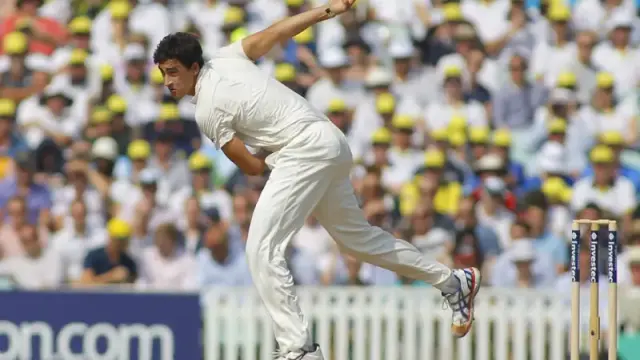
What the auction revealed, within hours, was the true shape of demand in Pakistani T20 cricket — and it looked a lot like a pace chart. Naseem's record PKR 86.5 million deal headlined the night. Haris Rauf went back to Lahore for PKR 7.6 crore. Daryl Mitchell (PKR 8.05 crore) and David Warner (PKR 7.9 crore) fetched the big overseas money, but the reporting around the room kept returning to the same observation: franchises were paying a premium for wickets with the new ball and at the death, because on Pakistan's flat decks those overs decide matches.
The evening itself, an eight-hour spectacle in Lahore, felt like a different sport's economy arriving in Pakistani cricket. Faheem Ashraf was the first player under the hammer and immediately fetched PKR 8.5 crore from Islamabad United — a record for about as long as it took Rawalpindi, the league's rebranded Rawalpindi-based franchise, to push Naseem's price past it — Rawalpindi being the new name over the door of the old Multan franchise, and clearly determined to announce itself. The two expansion franchises spent like they meant it, Sialkot Stallionz landing Sahibzada Farhan among their headline signings and the Hyderabad side building around overseas names. By the end of the night the top of the price list mixed batters and all-rounders — Daryl Mitchell, David Warner, Mark Chapman — with the quicks, but it was a fast bowler sitting alone at the summit.
There was a ruthlessness to it that the draft never allowed. Seasoned internationals and even national captains went unsold, paddles stayed down, and reputations that would have guaranteed a comfortable category slot under the old system were repriced in public. That is the honest trade the PCB made. The draft protected players from humiliation and franchises from their own impulses. The auction does neither — but it pays the best players something closer to their worth, and it told the whole country, in one evening, exactly which skills the market values. Pace, first of all.
The league that keeps minting quicks
None of this is an accident of one auction. The PSL's fast-bowling production line is structural, built into the rules the draft era wrote and the auction era has kept. The old squad formula forced every franchise to carry two Emerging players — young, uncapped domestic talent — and the current rules go further: squads of 16 to 20 must include at least two uncapped under-23 players, and one under-23 must appear in every playing XI. A teenage quick is not a luxury in this league. He is a regulatory requirement, with guaranteed overs in front of national selectors.
The categories list published ahead of the 2026 season reads like a scouting report on the pipeline. Emerging slots were held by Ali Raza at Peshawar, Ubaid Shah at Multan, Mohammad Zeeshan at Quetta and Hunain Shah at Islamabad — raw, fast, and cheap, exactly the profile the system is designed to surface. One rung up, the Platinum bands were stacked with bowlers the league itself developed or established: Shaheen Afridi and Haris Rauf at Lahore, Naseem Shah, Hasan Ali at Karachi, Mohammad Amir at Quetta. OmniWire has followed the same conveyor belt in the national set-up, from the T20 captaincy changing hands to a new-look side built around young names. The PSL is where those names are made, and it makes them fastest with a ball in hand.
And yet the draft is not entirely dead — its skeleton runs the auction. Players still enter the room sorted into the old bands, Platinum down to Silver, each with a base price attached, and franchises still think in the draft's grammar: how many top-band locals, how much purse for the overseas slots, where the Emerging value hides. The categories the PCB invented to keep the old system orderly turned out to be the market's filing system too. What changed is who captures the value. Under the draft, a breakout season earned a young quick a promotion one band at a time. Under the auction, it earns him a room full of paddles.
Two years to the next reset
So the preview for the next edition writes itself around one number: two. Every player signed at that first auction is on a two-year contract, which means the coming season is the last one before the grand auction scheduled after PSL 2027, when the market resets again and far fewer players can be retained. For an established star, 2027 is a defence of value. For an Emerging quick with one good season in him, it is a life-changing audition — bowl well, and the next time the paddles go up, a teenage category price becomes a Naseem-sized argument. The stage is widening, too: Faisalabad joined the host-city roster when the eight-team era began, taking the league's travelling roadshow — and its scouts — deeper into the country's pace-producing heartlands. Whether the pace premium survives a second auction, whether the expansion sides from Sialkot and Hyderabad can grow their own attacks rather than renting them, and whether Lahore's pace-first identity holds under market pressure — those are the questions the season will answer. On the evidence of February's bidding, do not bet against the fast men. In this league, as the hard school of subcontinent pitches keeps teaching everyone, speed with control is the scarcest resource of all.
A league's ambitions eventually run into bricks and floodlights. The PSL's now include a new home — the PCB has taken control of Niaz Stadium in Hyderabad for 20 years, with a PSL aim. On the field, the fast-bowling resurgence the draft keeps rewarding is part of a regional pattern, measured best in the tactical bowling analysis of subcontinent versus overseas pace attacks.