Hyderabad finally has a date with its own stadium again. The Pakistan Cricket Board has taken administrative control of Niaz Stadium for 20 years, under a memorandum signed with the Hyderabad Municipal Corporation, and work on the ground and pitch is to start straight away.
That sounds like a routine handover. It isn't. The ground has not hosted an international match since January 2008, when Pakistan played Zimbabwe in a one-day international, and it has not hosted first-class cricket since 2018 either. A generation of Hyderabad cricketers has grown up watching big cricket happen somewhere else.
The deal, in plain terms
The signing ceremony brought together PCB chief operating officer Sumair Syed and Hyderabad mayor Kashif Shoro. Syed set out the board's plan in plain terms: bring the venue up to international standard, install floodlights, and get matches back on the calendar. Shoro, for his part, welcomed the deal as a step for youth and sport in the city, and reminded everyone of an old local boast — Pakistan have never lost at this ground.
The terms are modest on paper. The PCB will pay HMC a monthly rent of Rs10,000. The corporation will receive 20% of gate-ticket revenue from matches at the venue. Ownership stays with HMC.
Control, though, moves. The board gets full administrative authority, along with commercial and broadcasting rights. It also takes on the cost and responsibility of upgrading the stadium, which is the part that has defeated earlier attempts to revive the place.
That history matters. A previous arrangement for the stadium's development was taken back in April 2018 by the then Municipal Committee Qasimabad, and the venue drifted again after that. First-class cricket stopped. International cricket never returned. So the length of this agreement — two full decades — is not a detail. It is the point. Twenty years gives the board time to spend money on dressing rooms, media facilities, seating and lights without wondering whether the ground will be handed back next season.
Reporting on the upgrade points to expanded spectator seating, modernised player dressing rooms and better broadcasting and media facilities, alongside the advanced infrastructure a top-tier venue needs. None of that happens in a month. But the sequence Syed described starts with the basics, and the basics are the right place to start: the ground itself, and the pitch.
Floodlights change everything
A stadium without floodlights in modern Pakistan cricket is a stadium with one hand tied. Day matches limit scheduling. They limit crowds, because working people cannot fill stands on a weekday afternoon. They limit television, which is where the money and the audience now live.
So the floodlight pledge is the most consequential line in the whole announcement. With lights, Niaz Stadium can host evening fixtures. With evening fixtures, it can be considered for the Pakistan Super League. Without them, talk of the PSL coming to Hyderabad would stay exactly that — talk.
Syed went further than general promises on this front. The board, he said, will try to stage at least one PSL match at Niaz Stadium during PSL 12, with several matches possible in PSL 13. Read that carefully. It is an aim, not a fixture list. No match has been allotted yet, and the stadium still has to reach the required standard first. But an aim stated publicly, by the chief operating officer, at the signing ceremony, is harder to walk back than a vague hope.
Hyderabad already has a stake in the league's future, which makes the target feel less abstract. Supporters following the league's wider reshaping can look back at our coverage of the PSL draft and the fast-bowling resurgence to see how much squad building now depends on venues that can actually host the games those squads are built for.
An academy, not just a ground
The second big announcement was quieter, and in the long run it may matter more. A regional cricket academy is to be set up at the stadium from January or February, staffed with coaches and physiotherapists.
A match, even a PSL match, lasts a day. An academy works all year. Hyderabad and the districts around it in Sindh have produced Pakistan cricketers before — the mayor made that point at the ceremony — but talent scattered across a region needs a centre to gather in. Trials, coaching, fitness work, physio support: that is unglamorous infrastructure, and it is also how a city stops relying on luck to produce its next international.
First-class cricket returning to the ground ties the two halves together. Young players at an academy need to watch the domestic game up close, on their own square. Senior players need a reason to keep coming back to Hyderabad between academies and festivals. Regular first-class fixtures give the stadium a rhythm again, instead of a single big night followed by another long silence.
There is a useful parallel in the national side's current reset. Pakistan have just changed their T20 leadership ahead of the Sri Lanka series, a story we covered when Pakistan handed the T20 captaincy to Sahibzada Farhan. New captains get headlines. New academies rarely do. Both, done properly, are how a system renews itself.
A past worth protecting, and a test to pass
Niaz Stadium is not a blank site waiting for a purpose. It hosted the opening match of the 1987 World Cup between Pakistan and Sri Lanka, the first World Cup staged in the subcontinent. It was also the venue for Javed Miandad's career-best Test innings, his unbeaten double hundred against India in January 1983 — The News records the score as 280 not out.
Pakistan's unbeaten record at the venue, mentioned more than once during the handover, carries the same weight locally. A ground where the national side has never lost is not just concrete and grass. It is part of how a city tells its own sporting story.
That is also why the long inactivity stung. The stadium sat in a cricket-mad city, with that history attached to it, while international cricket rotated through other centres. The February unveiling of a new PSL franchise's name and logo at the stadium earlier this year hinted that Hyderabad was moving back into the frame. This agreement turns the hint into a formal arrangement.
For readers who follow Pakistan's wider results rather than stadium news, the recent Asian Games cricket final against India is a reminder of how thin the line is between a team and the places that produce its players. Grounds, academies and domestic fixtures sit underneath every one of those results.
Scepticism is fair here. Hyderabad has heard promises about this stadium before, and the 2018 reversal is a matter of record, not rumour. An agreement, even a 20-year one, does not lay a pitch or raise a floodlight pylon.
So judge the next few months by visible things. Does work on the ground and pitch begin as quickly as promised? Do first-class fixtures appear in the domestic calendar with Hyderabad named as host? Does the academy open in January or February, with named coaches, rather than slipping quietly into next year?
Those are checkable facts, and they will arrive one by one. The PSL question will take longer. A single match in PSL 12 would be a powerful signal, but it depends on the upgrade meeting international requirements in time — seating, lights, media facilities and everything else a televised league match demands.
It is easy, from Lahore or Karachi, to treat a PSL fixture as one more line in a schedule. In Hyderabad it would land differently. A league match brings a travelling broadcast operation, visiting supporters, full hotels and a city shown live to an audience far beyond Sindh. For a place that has watched the league grow from a distance, hosting even one night of it is a statement that the map of Pakistan cricket has widened.
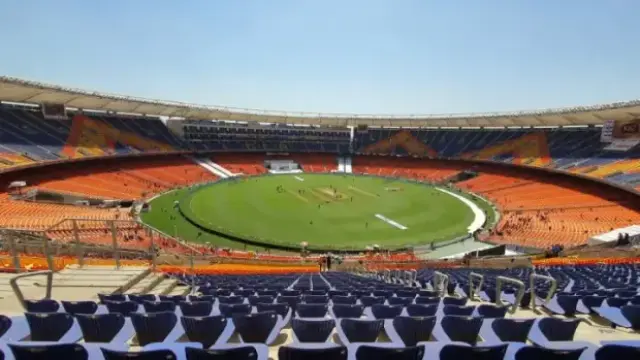
The stadium's scale is part of that conversation. The venue holds roughly 15,000 spectators in its current form, and seating expansion is among the upgrade items the board has set out. A PSL crowd, a television production and modern media facilities all press on the same question: can the ground, once works are complete, carry an event of that size comfortably and safely? That is what the coming months of construction and inspection will decide, long before any fixture is confirmed.
There is also the calendar underneath the glamour. First-class matches do not draw PSL crowds, but they draw something else — continuity. Scorers, ground staff, local officials and young volunteers learn their trades across a season of domestic cricket, not on a single big night. If the board's plan holds, the academy players training at the stadium in the morning could be watching a first-class match on the same ground in the afternoon. That is how a venue stops being a monument and becomes a workplace for cricket again.
None of this erases the gap between announcement and delivery. It does, at least, give Hyderabad a sequence to hold the board to: pitch and ground first, lights and facilities next, domestic cricket back on the calendar, an academy by early next year, and a PSL test after that. Each step is visible. Each step can be checked. The nearer-term calendar shows what home advantage currently looks like: Pakistan vs Sri Lanka across three T20 nights in Rawalpindi, with a new captain bedding in.
For now, this much is settled. The stadium has an owner that keeps ownership, a board that now holds control, a rent and revenue split written into an agreement, and a public plan covering the pitch, the lights, the academy and the domestic calendar. After 18 years without international cricket and eight without the first-class game, Hyderabad has something it has not had in a long time.
A timetable.