
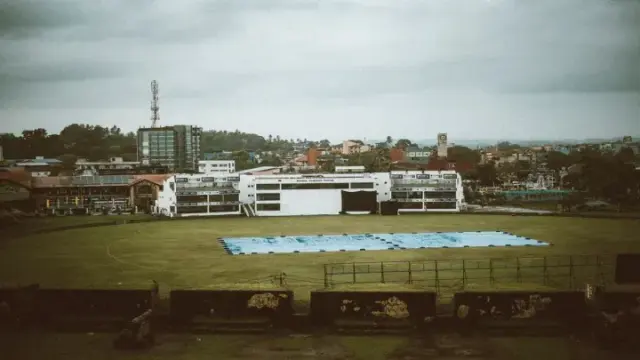
Rawalpindi gets the first look at a new Pakistan T20 side, and the man leading it out is not the man who led it at the World Cup. Sahibzada Farhan captains Pakistan against Sri Lanka in a three-match series on 9, 11 and 13 October, all three games at Rawalpindi Cricket Stadium, with Salman Ali Agha dropped from the T20 squad altogether.
That is the headline. A preview, though, has to answer a harder question: what is this series actually for? Three matches, at home, against a Sri Lanka side also missing senior names, will not remake Pakistan's T20 cricket on their own. But they will show how the selectors are thinking now, and whether Farhan the batter can carry Farhan the captain at the same time.
A new captain, and a sharper split
Farhan's appointment was not a leap in the dark. He finished the T20 World Cup in March as the tournament's leading run-scorer, with 383 runs at a strike rate of about 160. He then led Pakistan to a silver medal at the Asian Games. Form and recent leadership, in the same player, at the same moment.
That combination is rare in Pakistan's recent T20 history, where the captaincy has changed hands often and sometimes mid-cycle. We reported the change itself when Pakistan dropped Agha and handed Farhan the job; this series is where the decision stops being an announcement and becomes a record.
The risk is obvious too. An opening batter's job is already exposed — one early dismissal and the innings tilts — and captaincy adds field settings, bowling changes and the toss on top of it. If Farhan scores runs, nobody will talk about the burden. If he doesn't, everybody will. Three matches is a short runway, and Rawalpindi crowds are not known for patience.
Still, there is a logic to testing him here rather than in a tournament. A home bilateral series gives a new captain real international pressure without elimination pressure. Mistakes can be corrected two days later, in the second match, at the same ground.
Agha has not been rested. He has been left out of the T20 squad entirely, while remaining part of the one-day setup, where Shaheen Shah Afridi keeps the captaincy for the tri-series with Sri Lanka and England starting on 18 October. Babar Azam is in that ODI squad too.
Read together, those calls describe a selection policy splitting the formats more sharply than before. A player can be valued in one format and dropped in another, on current fit rather than seniority. That is a defensible approach. It is also a demanding one, because it tells every player in the T20 group that reputation buys less than it used to. For this squad, the message lands hardest on the middle order. Without Agha, responsibility for pacing an innings falls to a younger set of batters, and the margin for a slow start against Sri Lanka's spinners gets thinner.
The squad, line by line
Pakistan's 15 for the series, as named by the board on 5 October, is: Sahibzada Farhan (captain), Abdul Samad, Abrar Ahmed, Arafat Minhas, Fakhar Zaman, Hasan Nawaz, Muhammad Imran Randhawa, Khawaja Nafay (wicketkeeper), Maaz Sadaqat, Naseem Shah, Razaullah, Saim Ayub, Mohammad Salman Mirza, Shadab Khan and Sufiyan Moqim.
Start at the top. Fakhar Zaman and Saim Ayub give Farhan two very different partners to work with — one experienced and power-based, one younger and still building his international record. How Pakistan order those three across the series will say a lot about whether the new leadership wants stability or experimentation from the first over.
Hasan Nawaz is the name carrying the freshest form into the series. He was among the retained Asian Games players in this squad and scored 96 in the Asian Games final against India. Readers who want that campaign's ending in full can revisit our report on how India beat Pakistan to keep Asian Games cricket gold — Nawaz's innings was the reason that chase stayed alive as long as it did.
The spin group is where the squad looks deepest. Shadab Khan brings experience and lower-order batting. Abrar Ahmed and Sufiyan Moqim offer two different kinds of wrist-spin threat, and on a Rawalpindi surface that can slow as a match goes on, having three spin options lets a new captain change pace without changing the whole attack. Arafat Minhas adds another all-round option in the same department.
Pace, by contrast, leans heavily on Naseem Shah. He is the clear leader of the seam group in this squad, with Salman Mirza and Imran Randhawa in support and Razaullah — who has received a maiden call-up in the format — the least tested name of the set. If Naseem has an off night, the backup plan is youth. That is either brave or thin, depending on the night, and the series will probably show both readings at different moments.
Khawaja Nafay, the squad's wicketkeeper, sits in a similar position. A home series, a familiar ground, a crowd behind him — as auditions go, a keeper-batter could ask for worse conditions.
Sri Lanka arrive changed, too
This is not a full-strength touring side arriving to be measured against. Kusal Mendis captains Sri Lanka's 15, returning to lead the team, with Dushmantha Chameera named subject to fitness. Wanindu Hasaranga and Pathum Nissanka are both missing from the touring group.
That changes the contest. Hasaranga's absence removes Sri Lanka's most familiar T20 threat in the middle overs, which matters directly for Pakistan's young middle order. Nissanka's absence takes runs away from the top of Sri Lanka's innings and puts more weight on Mendis himself, both as captain and as a batter.
Sri Lanka's squad still carries real depth in spin — Maheesh Theekshana, Dunith Wellalage and Vijayakanth Viyaskanth — and experience in Dasun Shanaka and Kamindu Mendis. The pace group, beyond Chameera, includes Binura Fernando, Nuwan Thushara and Eshan Malinga. It is a side in transition, like Pakistan's, which is exactly why the series is hard to call and worth watching: neither team can hide behind a settled eleven.
Context from Pakistan's other recent cricket underlines the point about transition. The women's side's recent World Cup outing, covered in our report on Pakistan's bright start fading against India at Edgbaston, followed a familiar pattern — promise in patches, a result that slipped away. The men's T20 group is trying, visibly, to break that pattern by changing who leads and who plays, rather than waiting for a tournament to force the issue.
Three nights, and what they can answer
Playing all three matches at one venue cuts both ways. Conditions become familiar fast. A captain who reads the pitch well in the first match carries that knowledge into the second and third, and a bowler who finds the right length early does not have to start again on a different square.
It also removes excuses. If Pakistan's spin trio out-bowls Sri Lanka's on the same surface across three nights, that is a real finding, not a quirk of travel or conditions. If the young batters keep falling to the same kind of bowling, that is a real finding too — just a less comfortable one.
The schedule around the series adds one more layer. Four days after the third T20, the ODI tri-series begins at the same end of the country, with Pakistan facing Sri Lanka in the opener on 18 October before the tournament moves on to Lahore. Several names in this T20 squad appear in that ODI group as well. Workload, form and confidence from Rawalpindi will travel with them.
And for the league-minded, there is a longer thread to pull. Domestic and franchise form keeps feeding these selections, a cycle we traced in our look at the PSL draft and Pakistan's fast-bowling depth. A strong three matches for a fringe name here can change a franchise conversation later. Players know that, even if nobody says it in a press conference.
Watch the toss, and what Farhan does with it, because a new captain's first decision sets a tone. Watch whether Pakistan protect their young middle order or expose it early against Theekshana. Watch Naseem's first spell — if he strikes early, Sri Lanka's reshaped top order is under pressure immediately; if he doesn't, Farhan's spin options get tested sooner than planned.
Most of all, watch how the side reacts to its first bad ten minutes. Every T20 team has them. The Agha era ended with a change at the top; the Farhan era will be judged, starting Friday night in Rawalpindi, on whether the response to trouble looks different.
A short series cannot settle a batting order for the next two years, and nobody inside either camp will pretend it can. What it can do is narrow the argument. If Saim Ayub and Fakhar Zaman both fail across three innings on the same ground, the opening debate reopens at once. If one of the young middle-order batters owns a chase — reads the spinners, rotates strike, finishes calmly — that innings will be cited in every selection meeting that follows.
The same applies in reverse for Sri Lanka. Mendis leading a side without Hasaranga and Nissanka learns quickly which of his younger players travel well. A spinner who holds his nerve in Rawalpindi's shorter boundaries, or a seamer who defends a small total at the death, gives Sri Lanka something no training camp can manufacture: evidence gathered under pressure, away from home, in front of a loud crowd.
That, in the end, is what both boards bought with this fixture list. Not a trophy anyone will remember in five years, but information — about captains, about depth, about who shrinks and who grows when a match tightens. Information is a modest prize. In a transition, it is also the only honest one.
This series exists because of a decision taken off the field. Pakistan dropped Salman Ali Agha as T20 captain and handed the job to Sahibzada Farhan, and Rawalpindi is the first evidence of what the selectors think they bought. The venue question hanging over Pakistan's home calendar is being answered in parallel — the PCB's 20-year takeover of Niaz Stadium in Hyderabad signals where the board wants marquee nights staged next.
Three matches. One ground. Two squads in transition, and one captaincy beginning. That is enough.
Sources
Reuters, CricTracker, Cricket World
Explore live market benchmarks, 360° hardware specifications, and regulatory customs duty breakdowns updated daily: